When it comes to electrical safety, one small but essential component often goes unnoticed: the earth stake, also known as an earth electrode. Despite its simple appearance—a metal rod driven into the ground—it plays a critical role in keeping occupants and properties safe.
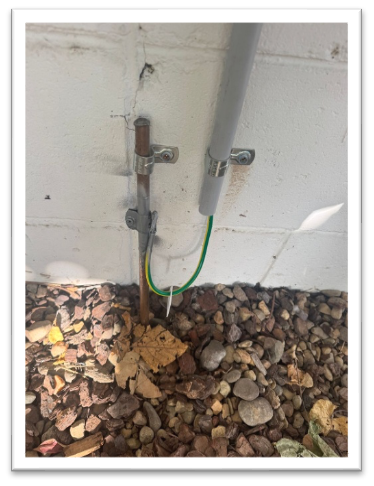
Compliant Earth Stake
What Is an Earth Stake?
An earth stake is a conductive metal rod (typically copper or galvanised steel) installed outside a home or building and connected to the electrical earthing system. Its purpose is to create a direct, low‑resistance path from your electrical installation into the ground.
This connection allows excess electrical energy—whether from a fault, a damaged cable, or an external surge—to safely dissipate into the earth rather than travelling through appliances, the switchboard, or worse, people.
Why Is an Earth Stake So Important?
Electrical faults can occur at any time. Without a proper earth connection, these faults can cause metal surfaces to become live, creating a risk of electric shock or fire. The earth stake ensures that safety devices such as circuit breakers and RCDs (safety switches) operate correctly by giving fault current a safe path to flow.
For homes, a compliant earth stake is crucial for protecting families and ensuring the entire property’s electrical system functions safely.
For unit blocks and multi‑dwelling complexes, the stakes are even higher. Shared switchboards, interconnected circuits, and higher demand loads make strong earthing essential for building-wide safety and compliance. A poor or corroded earth stake can affect every unit, putting residents and property managers at unnecessary risk.
When Should It Be Checked?
Earth stakes can deteriorate over time from weather exposure, corrosion, or physical damage. Regular inspections—especially during switchboard upgrades, renovations, or annual safety compliance inspections—ensure continued protection and compliance with Australian Standards.
At Fully Wired Electrical, we thoroughly check and test the earth stake as part of our Switchboard Inspection which we highly recommend all Body Corporates get completed by a qualified electrician every 2 years.
Examples of Non Compliant Earth Stakes:
Below are some of the most common examples of when an earth stake is no longer compliant or unsafe:
1. Insufficient Depth
Earth stakes must be driven to a minimum depth of 1.2 metres in Australia. Anything shallower is non‑compliant and may not achieve proper contact with moist soil.
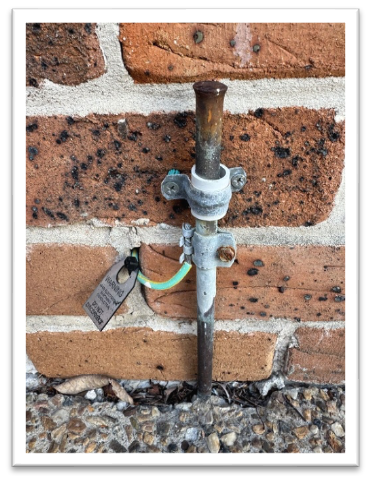
Corroded Earth Stake
2. Corrosion or Physical Damage
Stakes or their connection points that are corroded, bent, loose, or damaged from garden tools, vehicles, landscaping, or weather exposure are considered unsafe.
3. Poor Location (Dry Soil or Incorrect Separation)
If the stake is installed in soil that dries out excessively, or placed too close to underground services like gas or water pipes, it does not meet installation requirements. Adequate separation distances are required to prevent electrolytic damage.
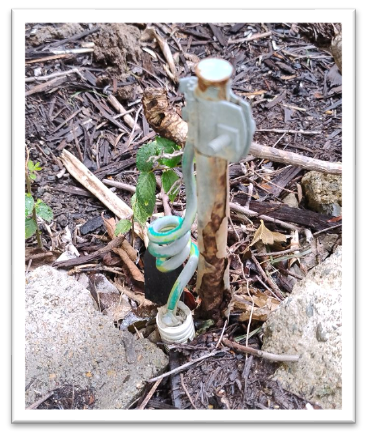
Corroded Earth Stake and not supported
4. Inaccessible or Unlabelled Connections
The AS/NZS 3000 requires that all earthing components be accessible, protected from damage, correctly labelled, and installed to adequate depth, meaning only a qualified electrician can legally and safely assess compliance.
Missing labels or buried connections breach AS/NZS 3000.
5. Failure of Earthing Tests
If EFLI testing shows high resistance or the protective devices cannot trip correctly under fault conditions, the earthing system—including the stake—is deemed non‑compliant.
Best way to ensure your building is compliant and safe?
Get regular inspections and tests completed by qualified and experienced electricians. Our Fully Wired team been Brisbane’s trusted team providing compliance services since 2008. Get in touch with us today on 1300 38 55 99, [email protected] or www.fullywired.com.au