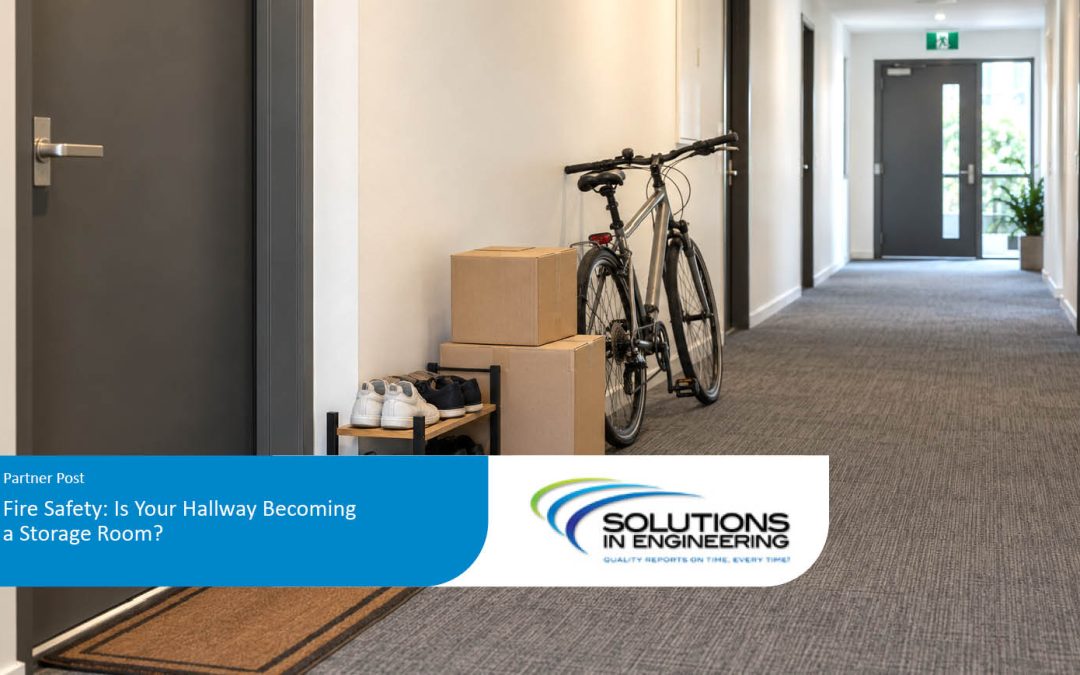
It starts with a pair of shoes outside the front door. Then comes a delivery box, a bike and a small shoe cabinet. Before long, the shared hallway has become an extension of someone’s apartment.
Convenient? Perhaps. But in an emergency, that hallway has a much more important job.
Fire safety in a body corporate community relies on both the building’s safety systems and the everyday actions of the people who live there. Owners, residents and the body corporate all have a part to play.
“It’s only there for a minute…”
Imagine a resident leaves a flat-pack bookshelf in the corridor, ready to assemble on the weekend. Their neighbour props open a fire door to make carrying groceries easier.
Neither action seems particularly significant—until an alarm sounds.
The bookshelf becomes an obstacle on the way out, while the open fire door cannot provide the protection it was designed to offer.
This hypothetical example shows why everyday habits matter. You might know exactly where your belongings are, but a neighbour, visitor or emergency responder may be navigating the same space under very different conditions.
Keep shared corridors, stairs and exits clear, and never wedge a fire door open. Report a fire door that does not close and latch properly rather than trying to adjust it yourself.
What Does the Body Corporate Look After?
Fire safety obligations depend on the building’s classification, use and installed systems. For schemes containing Class 2–9 buildings, key requirements include:
- Reviewing the Fire and Evacuation Plan annually and keeping a record of the review.
- Conducting an evacuation practice at least annually and recording the exercise.
- Completing and submitting an Annual Occupier’s Statement to the Queensland Fire Department for prescribed fire safety installations.
- Arranging inspections, testing and maintenance of the building’s prescribed fire safety installations by appropriately qualified contractors. These may include extinguishers, hose reels, hydrants, alarms, sprinklers, emergency lighting, exit signs and fire doors. Many require servicing more frequently than annually.
Your body corporate manager helps the committee coordinate the arrangements relevant to your scheme. Residents can support this work by providing access for scheduled inspections when required and promptly reporting damaged equipment, faulty doors or obstructed exits. A contractor’s inspection is important, but keeping the building safe between visits matters too.
Inside Your Home: A Deadline Worth Remembering
By 1 January 2027, all existing Queensland private homes, townhouses and units must have compliant interconnected photoelectric smoke alarms. Interconnection means that when one alarm activates, the others in the dwelling sound too.
If you live in your own property and have not checked your alarms, now is a good time to arrange a review of their type, age, placement and operation.
Do not assume that servicing the building’s common property fire systems also covers the smoke alarms inside your home. Confirm what is included, and never disconnect or disable an alarm to stop nuisance sounding.
Small Habits, Shared Protection
Keeping a hallway clear or reporting a faulty door might not feel like much, but these actions help protect everyone who uses the building.
Next time you walk from your front door to the street, take a quick look: are the exits clear, are fire doors closing properly, and is anything obstructing fire equipment?
After all, your hallway already has a job. It does not need to double as a storage room.